
In an age of instant messaging and email, addressing an envelope might feel like a relic of the past. Yet this small, precise skill remains essential whether you’re mailing a wedding invitation, sending a heartfelt thank-you note, paying a bill by check, or shipping an important legal document.
Postal services around the world rely on standardized formatting to sort millions of pieces of mail every day. A missing apartment number, a return address in the wrong spot, or an illegible ZIP code can throw off that entire system. The good news is that once you understand the basic structure, addressing an envelope becomes second nature.
This guide walks through every aspect of the process from the anatomy of an envelope to international formatting rules so you never have to guess again.
Anatomy of an Envelope
Before you pick up a pen, it helps to understand the structure of an envelope itself.
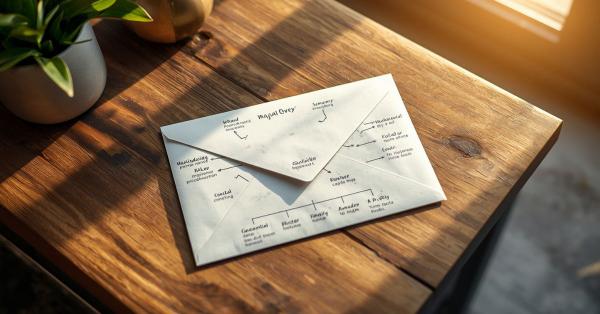
The return address belongs in the top-left corner. This is where your own name and address go, allowing postal services to send the letter back if it can’t be delivered. The recipient address sits in the center of the envelope; this is the largest and most important zone, since it’s what automated sorting machines scan first. The stamp goes in the top-right corner, and the space just below or beside it is reserved as the postmark area, where the postal service stamps the date and location of mailing. This area should always be left blank.
Envelope size also affects layout. A standard #The 10 envelope (used for letters and bills) has more horizontal space, while smaller envelopes like A2 or A7 (common for invitations and greeting cards) require tighter, more compact writing. Orientation matters too; most envelopes are used in landscape format, but square or invitation-style envelopes sometimes call for adjusted spacing.
Understanding this layout isn’t just about neatness it directly affects how quickly and accurately your mail gets processed. Getting the anatomy right is the foundation for everything that follows.
Tools and Materials Needed
Good addressing starts before you ever touch the envelope with the right tools. While a plain pen and envelope will always work, choosing the right materials can make your writing clearer and more professional.
Pen type matters more than most people realize. Gel pens tend to produce smoother, more legible strokes and are less likely to smudge on glossy or coated envelopes. Ballpoint pens are reliable and smudge-resistant but can skip on textured paper. Avoid felt-tip markers for small envelopes, as ink can bleed through thin paper. For formal occasions like weddings, many people use calligraphy pens for an elegant touch, though this requires practice.
Deciding between handwriting and printed labels depends on context. Printed labels or direct printer addressing are more practical for business mail, bulk mailings, or when legibility is a concern.
Envelope quality also plays a role. Thin, low-weight envelopes can absorb ink unevenly and are more prone to tearing in postal machinery. Slightly heavier paper stock (80-100 lb) holds ink better and gives a more polished appearance for formal correspondence.
Finally, keep a ruler or template handy if you’re printing addresses, as consistent spacing improves both appearance and machine readability. Having the right tools ready ensures your envelope looks professional from the very first stroke and reduces the chance of errors down the line.
Addressing the Recipient (Domestic Mail)
The recipient’s address is the most critical part of any envelope, since it directly determines whether your mail reaches its destination. For domestic mail, the standard format follows three lines, centered on the envelope.
Line one is the recipient’s full name. Include a title if appropriate Mr., Ms., Mrs., or Dr. especially for formal or professional correspondence. For casual mail, a first and last name is usually sufficient.
Line two is the street address, including apartment, suite, or unit numbers. If someone lives in an apartment complex, write the unit number directly after the street address (e.g., “123 Maple Street, Apt 4B”) or on its own line if space is tight.
Line three contains the city, state, and ZIP code, in that order, separated by a comma between city and state. The state should use its standard two-letter abbreviation (e.g., IL for Illinois), and the ZIP code should be double-checked for accuracy even if one wrong digit can send mail to the wrong region.
For added speed, consider using the ZIP+4 code, an extended postal code that narrows delivery to a specific block or building. While optional, it can shave time off delivery, especially for business mail.
Clear, consistent formatting in this section ensures automated sorting machines and human carriers can process your mail without confusion.
Adding the Return Address
The return address is often treated as an afterthought, but it plays an important functional role. Positioned in the top-left corner of the envelope, it identifies who the letter is from and most importantly allows postal services to send the mail back to you if it can’t be delivered to the recipient.
The format mirrors the recipient’s address, using three lines:
✔[Your Full Name]
[Your Street Address]
[Your City, State, ZIP Code]
Keep this section compact, since it occupies a smaller area than the recipient’s address. Avoid decorative fonts or oversized handwriting here, as it can clutter the corner and make the envelope look unbalanced. If you’re mailing on behalf of a business, include the company name above your own, especially for formal or official correspondence.
When might you omit a return address? It’s rare, but some people choose to leave it off for personal reasons, for example, certain anonymous greeting cards or specific privacy-sensitive mailings. However, this comes with a risk: if the envelope is undeliverable, it will likely be discarded rather than returned, and in some cases, mail without a return address may face additional scrutiny or delays during processing.
For nearly all everyday mailing bills, letters, invitations, and packages including a complete and accurate return address is considered best practice and helps ensure smoother handling throughout the postal system.
Stamp Placement and Postage
Stamps belong in the top-right corner of the envelope, positioned neatly without overlapping the postmark area or the recipient’s address block.
Determining the correct postage depends on the weight, size, and destination of your mail. A standard letter within the size and weight limits of a #A 10 envelope typically requires a single first-class stamp. However, heavier items such as multi-page documents, invitations with enclosures, or unusually shaped envelopes (square, oversized, or textured) often require additional postage. Post offices offer scales and postage calculators to confirm the correct amount before mailing.
For heavier or bulkier envelopes, you may need to apply multiple stamps or use a higher-denomination stamp to cover the extra cost.
Metered mail, commonly used by businesses, replaces traditional stamps with a printed postage marking generated by a postage meter machine. This method is efficient for high-volume mailing and often includes the date automatically, eliminating the need for manual stamp placement.
Whether using traditional stamps or metered postage, always ensure the marking is right-side up and fully visible; an upside-down or obscured stamp can confuse automated sorting equipment and slow down delivery.
International Mail Addressing
Addressing mail for international delivery requires extra care, as formatting conventions vary significantly from country to country. Getting these details right is essential for avoiding customs delays or lost packages.
The core structure remains similar to domestic mail recipient name, street address, and city/region but with one critical addition: the destination country must be written in capital letters as the final line of the address. This ensures postal workers, regardless of language, can quickly identify where the mail is headed.
Example:
Jane Smith
123 Maple Street
Toronto, ON M4B 1B3
CANADA
These forms typically ask for a description of contents, declared value, and sender information.
Country-specific formatting quirks are especially important to research before mailing. For example, the United Kingdom uses alphanumeric postcodes placed on their own line (e.g., “SW1A 1AA”), while Japan traditionally follows a reversed address order starting with the postal code, then prefecture, city, and finally the recipient’s name. Some countries also place the postal code before the city name rather than after.
Because of these variations, it’s wise to check the postal authority’s guidelines for the destination country, or use an online international addressing tool, before sending time-sensitive or valuable mail abroad.
Business and Formal Correspondence
Business and formal mail follows the same basic three-line structure as personal correspondence, but with added layers of professionalism and precision. Since this type of mail often represents a company or official capacity, accuracy and clarity are especially important.
Include titles, departments, and company names to ensure mail reaches the right person within a larger organization. A typical formal address might look like this:
Mr. John Doe
Marketing Director
Acme Corporation
456 Business Ave, Suite 300
New York, NY 10001
Using an “ATTN:” (Attention) line is useful when mailing a company without a specific named contact, or when you want to ensure the letter reaches a particular department. For example: “ATTN: Human Resources Department” placed above the company name directs the mail internally once it arrives.
For legal or official documents such as contracts, court notices, or certified mail precision becomes even more critical. These often require the recipient’s full legal name, exact suite/floor numbers, and sometimes additional service instructions (e.g., “Certified Mail” or “Confidential”) noted clearly on the envelope. Any ambiguity in formal correspondence can cause delays or misdelivery, which may have legal or business consequences.
Special Cases
Not all mail follows the standard format. Several special situations require unique addressing conventions to ensure proper delivery.
Addressing a P.O.😎 Box is straightforward but requires precision to write “P.O. Box [number]” in place of a street address, and omit the street name entirely, since postal machinery routes P.O. 🎉Box mail is different from home delivery.
Military mail uses a distinct system involving APO (Army/Air Force Post Office), FPO (Fleet Post Office), or DPO (Diplomatic Post Office) designations instead of a city name. The format typically looks like:
Rank, Full Name
Unit/Ship Name, PSC/Box Number
APO AE 09001
No country name is included, as these are treated as domestic addresses by postal services despite being overseas.
Multiple recipients at one address such as a married couple or family members are typically addressed jointly on a single line (e.g., “Mr. and Mrs. John Smith”) unless the mail is personal to one individual.
Wedding invitations follow their own etiquette, often using both an outer and inner envelope. The outer envelope carries the full formal address, while the inner envelope may use only first names or informal titles for close family and friends.
“Care of” (c/o) addressing is used when mail is sent to someone at another person’s address, for example, a guest staying temporarily. The format adds “c/o [Host Name]” above the street address, ensuring the host knows to pass along the mail.
Common Mistakes and How to Avoid Them
Even experienced senders make addressing errors that can delay or derail mail delivery. Recognizing these common pitfalls helps ensure your envelope reaches its destination smoothly.
Missing apartment or unit numbers is one of the most frequent mistakes. Without this detail, mail carriers have no way of knowing which unit within a building to deliver to, often resulting in returned or misdelivered mail.
Placing the return address in the wrong location such as the center of the envelope instead of the top-left corner can confuse automated sorting equipment, which is calibrated to scan specific zones for specific information.
Inconsistent abbreviations create unnecessary ambiguity. Mixing “St.” and “Street” or “Ave.” and “Avenue” within the same address isn’t technically wrong, but sticking to standard postal abbreviations throughout improves both readability and machine scanning accuracy.
Illegible handwriting remains a persistent issue, especially for handwritten envelopes. Postal scanning systems rely on clear, well-formed characters; when handwriting is too stylized or rushed, mail may require manual sorting, slowing delivery significantly.
Incorrect or missing ZIP codes can send mail to the wrong region entirely. Always verify ZIP codes using official postal service lookup tools rather than relying on memory, especially for less familiar addresses.
Avoiding these common errors takes only a few extra seconds of care but can mean the difference between prompt delivery and a lost or delayed piece of mail.
Digital and Printed Label Alternatives
While handwritten envelopes carry a personal touch, printed addressing has become the standard for business mail, bulk mailings, and situations where legibility is critical. Understanding the available options helps you choose the right method for each occasion.
Label makers offer a quick and consistent way to produce clean, professional-looking addresses. These compact devices print adhesive labels that can be applied directly to envelopes, eliminating handwriting variability entirely. They’re especially useful for small businesses or frequent senders who need uniform results.
Most word processing programs include envelope-printing templates that automatically format the recipient and return address correctly, reducing the risk of layout errors.
Mail merge software is particularly valuable for high-volume mailings, such as holiday cards, wedding invitations, or business announcements. By linking a spreadsheet of names and addresses to a document template, senders can generate dozens or even hundreds of correctly formatted envelopes in minutes, rather than addressing each one by hand.
Weighing the pros and cons comes down to context. Handwritten envelopes feel warmer and more personal ideal for invitations, thank-you notes, and sympathy cards. Printed envelopes, on the other hand, offer speed, consistency, and improved legibility, making them better suited for legal documents, business correspondence, and large-scale mailings where accuracy and efficiency matter more than personal touch.
Etiquette Considerations
Beyond the technical mechanics of addressing an envelope, etiquette plays an important role especially for formal or culturally significant correspondence.
Formal versus casual addressing norms differ based on context. Formal occasions weddings, condolence letters, or official invitations call for full names, appropriate titles (Mr., Mrs., Dr.), and no abbreviations. Casual correspondence between friends or family is more flexible, often using first names only or nicknames.
Handwriting etiquette for invitations carries particular weight in traditional settings. Wedding invitations, for instance, are typically expected to be handwritten rather than printed, as this reflects thoughtfulness and personal effort. Many people hire professional calligraphers for especially formal events to achieve an elegant, polished look.
Cultural etiquette differences must also be considered for international correspondence. In many Western countries, informal first-name addressing is increasingly acceptable, even in business contexts. However, in cultures with stronger hierarchical traditions such as Japan or South Korea using full titles and formal name order is essential to show proper respect.
Being mindful of these etiquette nuances demonstrates respect for the recipient and the occasion, transforming a simple envelope from a functional necessity into a small gesture of courtesy and care.
Quick Reference Checklist
Before sealing and sending any envelope, run through this consolidated checklist to catch common errors and ensure smooth delivery.
Recipient Address
- Full name included, with appropriate title if formal
- Street address is accurate and complete
- Apartment, suite, or unit number included (if applicable)
- City, state, and ZIP code correctly formatted
- ZIP+4 code added for faster processing (optional)
Return Address
- Placed in the top-left corner
- Includes your full name and complete address
- Kept compact and legible
Stamp and Postage
- Stamp placed in the top-right corner
- Correct postage applied based on weight and size
- Additional postage added for heavier or oversized envelopes
- Stamp is right-side up and unobstructed
International Mail (if applicable)
- Destination country written in capital letters
- Country-specific formatting rules followed
- Customs forms completed and attached, if required
Special Cases (if applicable)
- P.O. Box, APO/FPO/DPO, or “c/o” formatting used correctly
- Multiple recipients addressed appropriately
- Inner/outer envelopes prepared correctly for formal invitations
Final Check
- Handwriting or print is legible
- Consistent abbreviations used throughout
- No overlapping text between zones
- Envelope sealed securely
Running through this checklist takes less than a minute but significantly reduces the risk of delays, returns, or misdelivery.
Conclusion
Addressing an envelope may seem like a small, old-fashioned task in a world dominated by digital communication, but it remains a skill worth mastering. From paying bills and sending invitations to mailing legal documents or heartfelt letters, the way you address an envelope directly affects whether your message reaches its destination promptly and intact.
Throughout this guide, we’ve covered the fundamentals, the anatomy of an envelope, proper formatting for recipient and return addresses, stamp placement, and postage requirements as well as more nuanced topics like international mail, business correspondence, and special cases such as P.O. Boxes, military addresses, and wedding invitations.
The key takeaway is that precision and consistency matter. A missing apartment number, an incorrectly placed return address, or an illegible ZIP code might seem minor, but each can cause real delays in an automated postal system built on standardized formatting.
With practice, addressing an envelope becomes second nature, a small skill that continues to serve you well, no matter how digital the world becomes.
That completes all 14 sections. Would you like me to compile the full article into an updated document file?