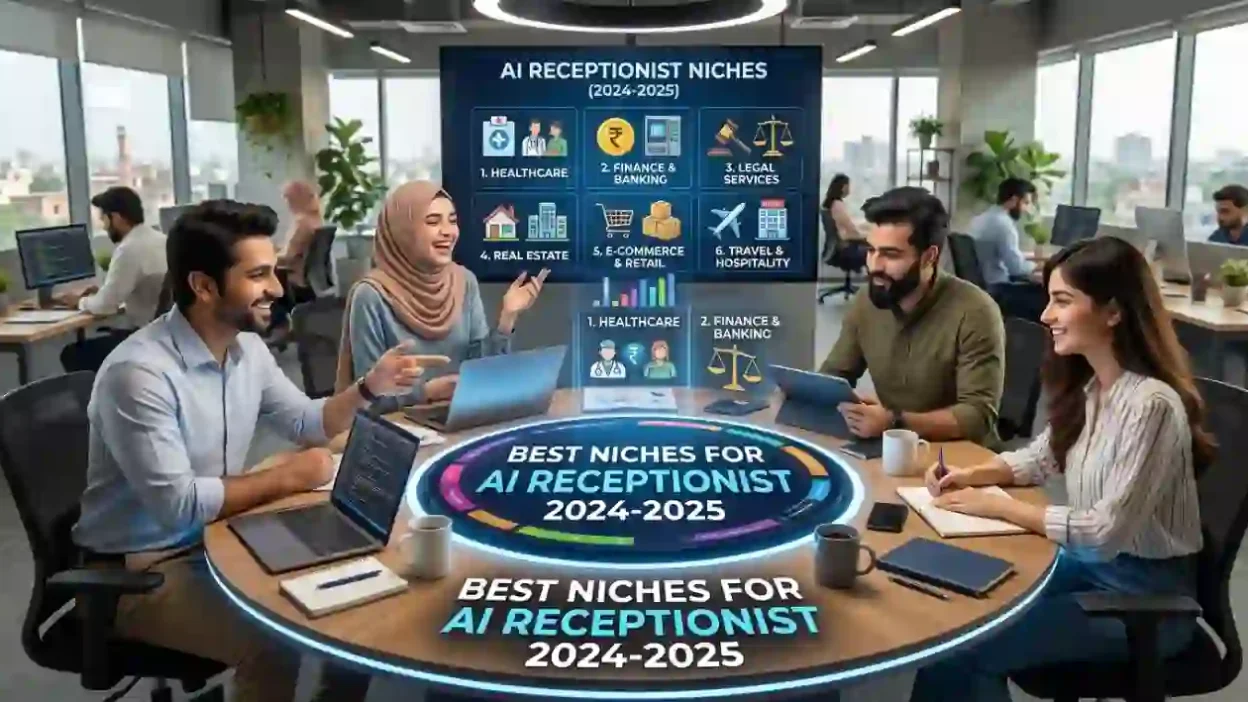
The best niches for AI receptionist services in 2026 and 2027 include dental offices, medical practices, law firms, real estate agencies, home service companies, salons, veterinary clinics, auto repair shops, property management firms, and accounting businesses.
These industries benefit from automated call answering, appointment scheduling, lead capture, and after-hours customer support.
Key Takeaways
- Dental clinics and medical practices can use AI receptionists to manage routine calls and appointment requests.
- Law firms and real estate agencies can capture leads when staff members are unavailable.
- Plumbers, HVAC companies, and electricians can handle more incoming calls while working on-site.
- Salons, veterinary clinics, and auto repair shops can automate bookings and common questions.
- The strongest niche depends on call volume, customer value, integration needs, and the business’s willingness to pay.
best niches for ai receptionist 2026 2027
Introduction
AI receptionists became an important business automation option in 2024 and 2025. These tools use artificial intelligence to answer phone calls, respond to common questions, collect customer information, schedule appointments, and transfer callers to the right person.
For entrepreneurs offering AI phone services, choosing the right niche can make a big difference. Some businesses receive calls throughout the day but cannot always answer because employees are busy serving customers, meeting clients, or working outside the office.
The best niches for AI receptionist 2024 2025 are industries where missed calls can lead to lost bookings, delayed service, or missed sales opportunities. However, not every business has the same needs, budget, or tolerance for automated conversations.
In this guide, you’ll discover 10 promising industries for AI receptionist services, how each industry can benefit, and what to consider before choosing a target market. These recommendations reflect practical business needs rather than a verified ranking of historical market share.
What Does “Best Niches for AI Receptionist 2026 2027” Mean?
The phrase refers to industries where businesses can benefit from using AI-powered phone answering and receptionist services during 2024 and 2025.
An AI receptionist can answer incoming calls, gather caller details, provide approved business information, schedule appointments, and route calls based on predefined rules. Depending on the platform, it may also connect with customer relationship management (CRM) systems, calendars, and booking software.
A niche is a specific market you choose to serve. Instead of selling one general AI answering solution to every business, you might focus on dental clinics, law firms, or HVAC contractors.
This approach allows you to build specialized call flows, understand common customer questions, and create service packages that match a particular industry’s needs.
Why Choose a Specific AI Receptionist Niche?
Selecting a focused niche can make your AI receptionist business easier to market and manage.
Benefits include:
- Clearer marketing: You can explain how your service solves a specific industry’s problems.
- Better service design: Call scripts and workflows can match common customer requests.
- More relevant demonstrations: Prospective clients can see realistic examples from their industry.
- Simpler sales conversations: You can focus on missed calls, bookings, and lead capture instead of explaining every AI feature.
- Repeatable delivery: Similar businesses often need similar call-handling workflows.
- Stronger differentiation: Industry-specific knowledge can help you stand out from general answering services.
The goal is not simply to find businesses that receive calls. It is to find businesses with a meaningful problem that your service can solve reliably.
10 Best Niches for AI Receptionist Services
1. Dental Clinics
Dental offices are a promising niche because they handle appointment requests, schedule changes, treatment questions, and insurance-related inquiries.
Reception staff may be busy checking in patients or coordinating with dental professionals. An AI receptionist can handle routine calls and collect appointment preferences while staff focus on patients in the office.
Best use cases:
- Booking and rescheduling appointments.
- Answering approved questions about office hours and location.
- Collecting basic information from prospective patients.
- Routing urgent concerns to the appropriate staff member.
Example:
A dental clinic can use an AI receptionist to answer calls during lunch breaks and collect appointment requests after closing.
Important consideration:
Protect patient information and verify that the service meets applicable privacy and security requirements, including HIPAA obligations where relevant. Avoid allowing the system to diagnose conditions or make unsupported medical recommendations.
2. Medical Practices
Primary care offices, specialist clinics, and other outpatient practices often receive calls about appointments, office policies, referrals, and prescription-related requests.
An AI receptionist can help organize routine inquiries and direct callers to the correct department. It can also explain approved administrative information without requiring staff to answer every basic question.
Best use cases:
- Scheduling routine appointments.
- Providing office hours and location details.
- Routing calls to the correct department.
- Collecting nonurgent callback requests.
Example:
A dermatology practice could use an AI phone agent to handle appointment requests while employees assist patients at the front desk.
Important consideration:
Medical workflows require careful safeguards. Emergency calls, clinical advice, sensitive health information, and prescription questions should follow approved escalation procedures rather than relying on unrestricted AI responses.
3. Law Firms
Law firms can benefit from AI receptionists because potential clients may call after business hours or while attorneys are in meetings or court.
A well-configured system can collect basic intake details, identify the type of legal service requested, and arrange a consultation. This helps firms respond to prospective clients without interrupting every ongoing task.
Best use cases:
- Capturing new-client inquiries.
- Scheduling consultations.
- Collecting basic contact information.
- Routing calls by practice area.
Example:
A family law firm could use an AI receptionist to collect callback requests from people seeking an initial consultation.
Important consideration:
Legal intake requires confidentiality, appropriate data handling, and clear boundaries. The AI should not promise legal outcomes, provide unauthorized legal advice, or imply that an attorney-client relationship has been established.
4. Real Estate Agencies
Real estate agents frequently receive calls from prospective buyers, sellers, tenants, and property owners. They may miss inquiries while showing properties, attending inspections, or meeting clients.
An AI receptionist can capture lead information, answer approved questions about listings, and schedule callbacks or viewings when connected to the appropriate systems.
Best use cases:
- Capturing buyer and seller leads.
- Scheduling property tours.
- Answering basic office questions.
- Routing inquiries to the right agent.
Example:
An agent showing a property can rely on an AI receptionist to record a new buyer’s preferred location, budget range, and contact details.
Why it works:
Real estate inquiries can be time-sensitive, and organized lead capture helps agents follow up more efficiently.
5. HVAC, Plumbing, and Electrical Businesses
Home service companies are among the most practical niches to consider. Technicians often work in customers’ homes, drive between jobs, or operate equipment that makes answering calls difficult.
An AI receptionist can gather service requests, collect addresses, identify the type of problem, and route urgent calls according to company policy.
Best use cases:
- Capturing new service requests.
- Scheduling estimates and appointments.
- Collecting customer addresses and callback details.
- Routing emergency requests to an on-call employee.
Example:
An HVAC company could use an AI receptionist to capture heating repair requests while technicians are completing service visits.
Why it works:
A missed call may represent a valuable service opportunity, particularly when a customer needs help quickly.
6. Hair Salons and Beauty Businesses
Salons, barbershops, nail studios, and spas often have employees who cannot answer the phone while serving customers.
An AI receptionist can provide business hours, explain approved service information, and help customers request appointments. Some systems can connect directly to booking calendars and send confirmations.
Best use cases:
- Booking or rescheduling appointments.
- Answering questions about opening hours.
- Explaining basic service options and policies.
- Handling calls during busy periods.
Example:
A hair salon could use an AI receptionist to collect booking preferences while stylists are working with clients.
Why it works:
These businesses depend on appointments, and a smoother booking process can improve the customer experience.
7. Veterinary Clinics
Veterinary clinics receive appointment requests, vaccination inquiries, questions about office hours, and calls from concerned pet owners.
An AI receptionist can organize routine administrative requests and direct urgent animal health concerns to clinic staff. This can reduce interruptions at the front desk.
Best use cases:
- Scheduling routine visits.
- Sharing approved information about clinic hours.
- Collecting callback requests.
- Routing urgent calls to veterinary staff.
Example: A veterinary clinic could use an AI receptionist to schedule routine checkups while employees assist animals and their owners.
Important consideration: The system should not attempt to diagnose animals or determine independently whether a serious condition can wait. Clinics need clear escalation instructions for urgent cases.
8. Auto Repair Shops
Auto repair businesses receive calls about repair estimates, service appointments, maintenance, vehicle status, and parts availability.
An AI receptionist can collect vehicle details, record service requests, and schedule appointments when integrated with the shop’s workflow.
Best use cases:
- Booking maintenance appointments.
- Collecting vehicle make, model, and service concerns.
- Recording estimate requests.
- Routing existing customers to service advisors.
Example: A repair shop could use an AI receptionist to collect oil-change bookings while mechanics work on vehicles.
Why it works: It helps separate routine scheduling from calls that require a technician or service advisor.
9. Property Management Companies
Property managers handle calls from tenants, landlords, prospective renters, and contractors. Requests can involve rent procedures, viewing appointments, maintenance problems, and building access.
An AI receptionist can categorize incoming requests and direct them to the correct team or approved emergency contact.
Best use cases:
- Recording maintenance requests.
- Scheduling rental viewings.
- Answering approved questions about office hours.
- Routing urgent property issues.
Example: A property management company could use an AI receptionist to log a leaking-pipe report and notify its designated maintenance contact.
Important consideration: Emergency procedures must be reliable. The system should follow the property’s documented escalation policy and avoid treating every maintenance issue as routine.
10. Accounting and Tax Preparation Firms
Accounting firms often receive calls about consultations, document submission, service fees, deadlines, and appointment availability.
During tax season, the volume of routine inquiries may place extra pressure on administrative staff. An AI receptionist can help organize requests and schedule meetings.
Best use cases:
- Booking consultations.
- Answering approved questions about services.
- Collecting callback information.
- Routing existing clients to the appropriate employee.
Example: A tax preparation firm could use an AI receptionist to schedule consultations while accountants work on client returns.
Important consideration: Keep financial records and sensitive client information protected. The AI should not provide unapproved tax advice or make claims about a client’s tax liability.
Comparison Table
| Alternative niche | Best used for | Main benefit |
|---|---|---|
| Dental clinics | Patient scheduling | Fewer interruptions |
| Medical practices | Administrative calls | Organized call routing |
| Law firms | New-client intake | Better lead capture |
| Real estate agencies | Buyer and seller inquiries | Faster follow-up |
| Home service companies | Service requests | Fewer missed opportunities |
| Salons and beauty businesses | Appointment booking | Easier scheduling |
| Veterinary clinics | Routine inquiries | Less front-desk pressure |
| Auto repair shops | Repair bookings | Organized service requests |
| Property management | Tenant and maintenance calls | Better request routing |
| Accounting firms | Consultations | More efficient scheduling |
Common Mistakes When Choosing an AI Receptionist Niche
1. Choosing an Industry Only Because It Seems Popular
A popular industry is not automatically a profitable one. Research the number of potential clients, their call volume, existing software, and willingness to pay before committing.
2. Ignoring the Cost of Missed Calls
Focus on the business problem rather than the technology alone. A company that rarely receives calls may not need a dedicated AI receptionist.
3. Offering the Same Workflow to Every Business
A law firm’s intake process differs from a salon’s booking process. Customize call flows, escalation rules, and integrations for the target industry.
4. Overlooking Privacy and Compliance
Healthcare, legal, and financial businesses may handle sensitive information. Review applicable laws, vendor security practices, data retention, and access controls before deployment.
5. Promising Features the System Cannot Deliver
Do not promise perfect conversations, guaranteed bookings, or complete replacement of human staff. Test the system under realistic conditions and provide a clear path to human assistance.
Frequently Asked Questions
1. What is the best niche for an AI receptionist business?
Home service companies, dental offices, law firms, and real estate agencies are strong niches to evaluate. Each can benefit from lead capture, call answering, or appointment scheduling. The best choice depends on local demand, call volume, customer value, competition, and your ability to deliver a reliable solution.
2. Are AI receptionists still relevant after 2025?
Yes. AI receptionists can continue to help businesses automate routine phone tasks, provided they offer reliable performance and fit the company’s workflow. Businesses should evaluate current capabilities, integration options, privacy safeguards, and total costs instead of relying only on trends from 2024 or 2025.
3. Which businesses need AI phone answering the most?
Businesses that receive frequent calls while employees are occupied are good candidates. Examples include plumbers, HVAC contractors, dental clinics, repair shops, and real estate agencies. Companies that lose valuable bookings or leads when calls go unanswered may benefit the most.
4. Can I sell AI receptionist services to small businesses?
Yes. Small businesses may find AI receptionists useful when they cannot afford a full-time receptionist or need help outside normal business hours. Start with a simple service, such as call answering and appointment requests, and expand only when clients need additional features.
5. How do AI receptionists make money?
AI receptionist providers commonly charge a recurring subscription, a setup fee, usage-based charges, or a combination of these. Pricing depends on call volume, integrations, customization, and support. Calculate software, telephony, implementation, and maintenance costs before setting your prices.
6. Are dental clinics a good target market for AI receptionists?
Dental clinics are worth evaluating because they handle frequent appointment requests and routine administrative calls. However, you’ll need appropriate privacy protections, reliable scheduling integrations, and clear escalation procedures. A demonstration that solves a real scheduling problem can help establish whether a clinic is a good prospect.
7. Do AI receptionists replace human receptionists?
Not necessarily. Many businesses use AI to handle routine questions, collect details, and manage calls when employees are busy. Human staff remain important for sensitive conversations, unusual requests, complex decisions, and situations requiring judgment or empathy.
8. How should I choose my first AI receptionist niche?
Compare three to five industries based on call frequency, missed-call costs, ease of reaching decision-makers, integration requirements, and compliance risks. Interview business owners and test a demonstration with realistic calls. Choose the niche where you can solve a clear problem and deliver measurable value.
Conclusion
The best niches for AI receptionist 2024 2025 include dental clinics, medical practices, law firms, real estate agencies, home service companies, salons, veterinary clinics, auto repair shops, property management companies, and accounting firms.
Each industry has different reasons to automate phone calls, from appointment scheduling to lead capture and maintenance requests.
For beginners, home service businesses, salons, and auto repair shops may be practical starting points because their routine call workflows can be relatively straightforward.
Healthcare and legal services can also offer valuable opportunities, but they require greater attention to privacy, accuracy, and escalation procedures.
Before choosing a niche, talk to potential customers and learn which calls consume the most staff time or lead to missed opportunities. Build a small demonstration around that problem, test it thoroughly, and measure the results.