
Decoding Labradoodle Behaviour: What’s Normal and What’s Not
Every new Labradoodle owner hits the same moment of doubt. Your pup chews the rug, barks at the postie, or won’t leave your side, and suddenly you’re wondering if something’s wrong. Most of the time, it’s just normal Labradoodle behaviour playing out in real time.
At Oodle Pups, we’ve bred and raised Australian Labradoodles in Brisbane for years, which means we’ve fielded these same worries from hundreds of new owners before you. And in many cases, we’ve found that a behaviour that looks alarming at first is completely normal for the breed and age.
This guide breaks down what’s normal and what deserves a closer look. Keep reading to learn how to recognise common behaviours and respond to your Labradoodle’s needs.
Most Labradoodle Behaviour Myths Come from Comparing Puppies to Adult Dogs
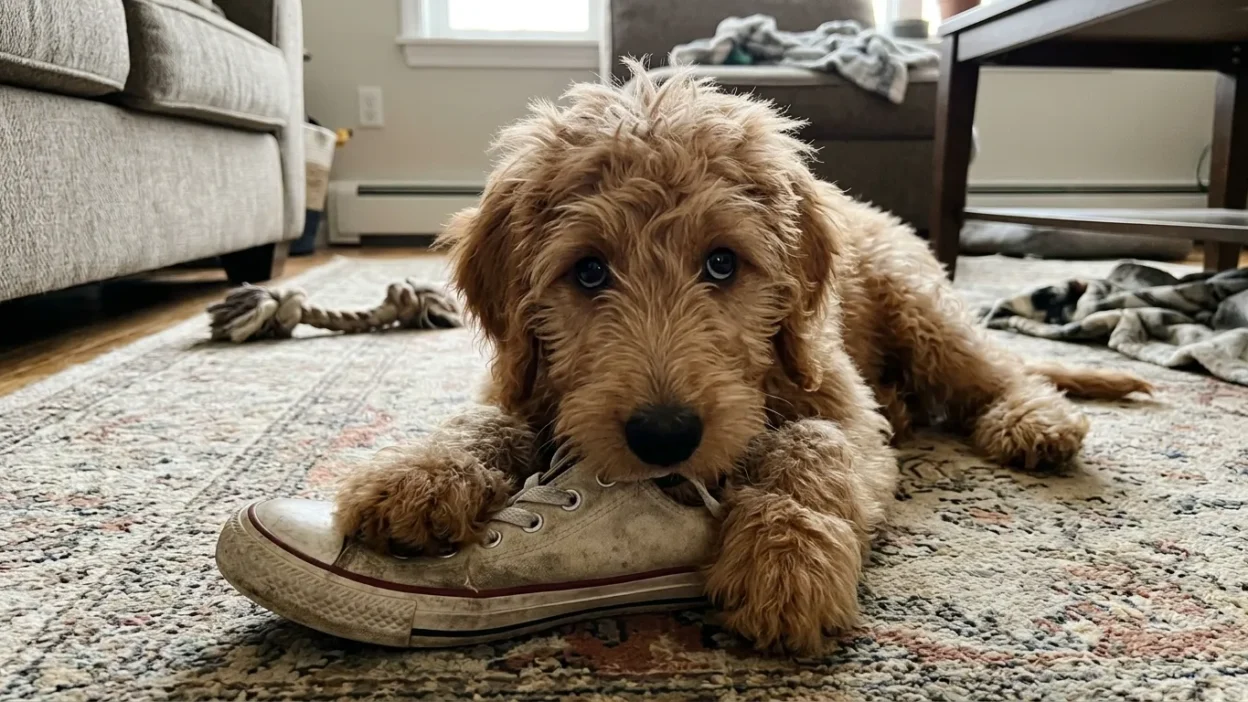
A Labradoodle puppy and a fully grown adult dog don’t behave the same way, yet owners often judge the two against one identical standard. A puppy that chews shoes, barks at shadows, or can’t settle for five minutes isn’t misbehaving. It’s simply too young to have the self-control an adult dog develops with time.
This comes partly from the breed’s parent lines. The Poodle’s intelligence and the Labrador Retriever’s eagerness combine to create genuinely clever dogs. However, intelligence and impulse control develop on different timelines, and most Labradoodles don’t settle into adult behaviour until somewhere between 18 months and two years old.
Once you know that timeline, the early chaos makes a lot more sense.
Why Chewing Is Just Normal Labradoodle Puppy Behaviour
A common complaint is chewing, and it’s a sign your pup is going through teething. Teething starts around three months old and continues until the adult teeth fully come through, which means puppies chew to ease sore gums, not to destroy your belongings.
Chewing furniture, shoes, and skirting boards often peaks between four and seven months, right when teething overlaps with natural curiosity about textures. Giving your puppy a proper chew toy early on redirects that instinct before it becomes a habit aimed at your furniture. And when the teething phase passes, most Labradoodles lose interest in chewing on their own.
Toilet training tends to run alongside teething. Puppies at this age still have small bladders and limited control, so accidents mainly mean they couldn’t hold their bladder. That’s why it makes sense to go easy on your pup through both stages at once.
Labradoodles Rarely Bark Without a Reason
Labradoodles bark less than most dogs, which makes it easy to notice when it happens more than usual. Common causes include:
- A knock at the door
- Another dog walking past the fence
- A stranger approaching the yard
- A loud noise like a vacuum or thunder
These reactions are instinct, not a flaw in temperament. Because of that, telling your pup off for it rarely works. You can’t train away a response that’s hardwired in.
Boredom causes a different kind of barking. A Labradoodle left alone for long stretches without company or activity often barks out of frustration rather than alertness. And a steady routine fixes this better than correction ever will.
For example, a set feeding time, walk time, and bedtime each day give your pup fewer reasons to bark from restlessness, since they know what’s coming next.
With barking mostly sorted, the next behaviour worth watching is how your Labradoodle acts when you’re not even in the room.
Why Clingy Behaviour Is Built into the Labradoodle Breed
Wally Conron created the Australian Labradoodle in the late 1980s, aiming for a guide dog that wouldn’t set off allergies in people with asthma or fur sensitivities. So sticking close to their owner comes naturally, since that closeness is what made the breed useful as a working companion in the first place.
Take a look at how that shows up day to day, and when it’s worth a second look.
Shadowing You Is a Bonding Trait in Australian Labradoodles
A properly socialised puppy learns within the first few weeks that you’re a safe base to return to, which is why they trail you room to room instead of settling alone.
You could let your Labradoodle meet other dogs or pets during this window to teach them that safety doesn’t only come from you. That regular contact with other animals in the house usually eases the shadowing over time.
When Clinginess Signals Anxiety Instead of Attachment
Whining, pacing, or destructive behaviour in your dog the moment you leave the room points to separation anxiety rather than simple attachment.
You can spot the pattern with a simple test: does your pup struggle even during very short absences, like stepping into another room for 30 seconds? If so, start with crate training. Pair it with positive reinforcement, like a treat or calm praise when your pup settles, and your Labradoodle learns that time alone isn’t something to fear.
Quick Tip: Start with two-minute absences, then add two more minutes every few days once your pup settles without whining.
How Exercise, Mental Stimulation, and Dog Food Affect Labradoodle Behaviour
Physical exercise burns energy, mental stimulation uses up focus, and dog food fuels both. A pup that’s short on exercise, mental stimulation, or proper nutrition is more likely to chew, bark, or pace from pent-up energy.
Here’s what to aim for with each one:
- Daily Exercise Burns Off Excess Energy: Labradoodles need at least 30 to 60 minutes of daily walks or active play. Splitting this across two or three shorter sessions works better than one long outing. Without enough movement, unused physical energy often turns into pacing, chewing, or barking indoors.
- Mental Stimulation Keeps Boredom at Bay: Puzzle toys, scent games, or basic dog sports give your Labradoodle’s brain something to work on. A mentally tired dog settles faster than a physically tired one.
- Dog Food Affects Energy and Mood: Dog food built around high-quality animal protein supports steady energy levels, while cheap fillers can cause spikes and crashes that make behaviour harder to predict. You should look for a named protein source like chicken or lamb listed first on the label.
If you get these three right, most of what looks like bad behaviour sorts itself out on its own. While exercise and food set the foundation, consistent training is what turns a Labradoodle’s natural intelligence into good habits.
What Consistent Training Fixes in a Labradoodle’s Behaviour
That consistency starts with short training sessions rather than long ones, since puppies lose focus fast. For example, five to ten minutes, two or three times a day, builds habits that stick, while a single 30-minute block mostly just wears your puppy out.
Positive training sessions work well during these short bursts. Click or say “yes” the instant your Labradoodle does the right thing, then follow with a treat. Your pup connects the reward to that exact moment, instead of anything that happened a few seconds before or after.
Once you’ve established a training routine, bite inhibition should be one of the first skills you teach. And you should start training as early as eight weeks old. This stage teaches your puppy how much pressure is too much when mouthing hands or toys, and it’s easy to miss if you delay training.
We’ve seen first-time dog owners struggle most with this exact skill. After all, a nipping puppy feels different to handle than an adult dog mouthing on purpose. If progress stalls here, a professional dog trainer can usually solve it within a few sessions.
What Labradoodles Need for Healthy Nails and Hips as They Grow
Behaviour isn’t only about habits and training. Physical discomfort changes how a Labradoodle acts, too, and nails are an easy one to miss.
Long nails push against the ground with every step, which can alter posture and make your Labradoodle reluctant to walk or play. You should use a dog nail clipper every two to three weeks to keep nails short enough to avoid that discomfort altogether.
Beyond everyday discomfort, joint health can also affect how your Labradoodle moves and behaves. Hip dysplasia develops when the hip joint doesn’t form properly. Genetics plays a major role, while excess weight and inappropriate exercise can contribute to joint problems. Keeping your dog at a healthy weight helps reduce strain on developing joints.
Progressive retinal atrophy (PRA) is another condition worth knowing about, though it affects eyesight rather than joints. Responsible breeding programs screen for it through DNA testing. Oodle Pups also runs this testing on our own breeding dogs, so every litter starts with that risk already checked.
Staying ahead of these common health concerns protects the easygoing temperament you’ve worked to build throughout this entire guide.
Trust What Your Labradoodle Is Actually Telling You
As you’ve probably noticed by now, most of what worried you at the start of this guide turns out to be ordinary Labradoodle behaviour, instead of a problem to fix. Chewing fades with age, barking settles with routine, and clinginess usually means your pup feels safe with you.
What Labradoodles need most is consistency: steady exercise, proper food, early training, and attention to their physical comfort as they grow. Get these right, and most behaviour concerns sort themselves out without extra intervention. Pet owners who stay patient through the puppy stage are rewarded with excellent family pets that grow into calm, steady adults.
If something still feels off after reading this guide, trust that instinct. Reach out to Oodle Pups, and we’ll help you figure out whether it’s normal puppy behaviour or something worth a proper look.