
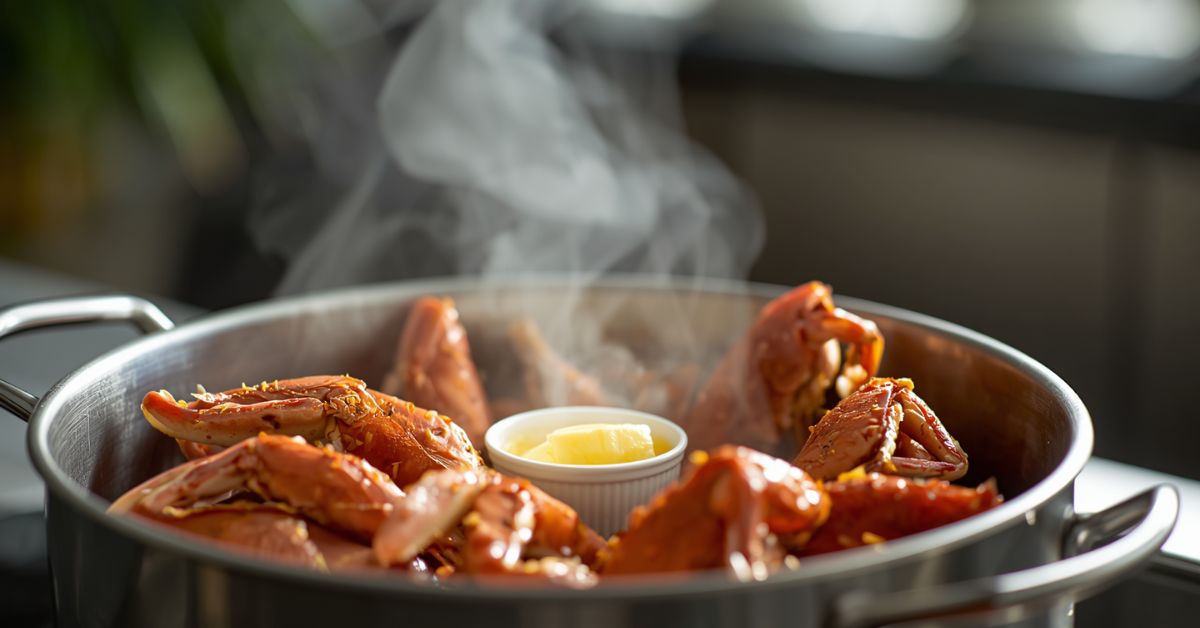
Craving buttery, tender crab legs but not sure how to cook them at home? Learning how to steam crab legs is easier than you might think. You only need a large pot, a little water, and a steamer basket to get started.
Steaming is a great way to warm crab legs without soaking them in water. It helps keep the delicate meat moist and flavorful. Best of all, most crab legs sold in stores are already cooked, so you are usually reheating them rather than cooking them raw.
You can steam frozen or thawed crab legs, including popular varieties like snow crab and king crab. The key is knowing how much water to use, how long to steam them, and when they are ready.
In this guide, you’ll learn the simple steps for steaming crab legs, plus timing tips, seasoning ideas, serving suggestions, and common mistakes to avoid.
What You Need to Steam Crab Legs
One of the best things about steaming crab legs is that you do not need a long list of ingredients or special kitchen equipment. A large pot, a steamer basket, water, and crab legs are enough to make a simple meal. A few extra ingredients can add even more flavor if you like.
Essential Equipment
Large pot: Choose a pot that is wide and deep enough to hold your crab legs and steamer basket. Make sure the lid fits tightly so the steam stays inside.
Steamer basket: A steamer basket keeps the crab legs above the water. This allows hot steam to surround the crab instead of boiling it directly.
Tongs: Use long kitchen tongs to safely place and remove the hot crab legs.
Crab cracker or kitchen shears: These tools make it easier to open thick shells and reach the meat inside.
Basic Ingredients
You only need two main ingredients:
- Crab legs
- Water
Frozen or thawed crab legs can both work. Snow crab and king crab are popular choices, but the same basic steaming method works for many cooked crab legs.
Optional Ingredients for Extra Flavor
You can add ingredients to the steaming water or serve them with the finished crab. Try lemon slices, garlic cloves, bay leaves, or seafood seasoning for extra aroma.
For serving, melted butter and fresh lemon juice are simple favorites. Garlic butter is another great option if you want a richer flavor.
The most important thing is to keep the crab legs above the water level. You want plenty of steam, but you do not want the crab sitting directly in boiling water.
next and 250 words count (Heading ko h2 karana ha)
How to Steam Crab Legs Step by Step
Now that you have your ingredients and equipment ready, it is time to steam the crab legs. The process is simple, but a few small details can make a big difference. Follow these steps for hot, tender crab meat.
Step 1: Prepare the Pot
Pour about 1 to 2 inches of water into a large pot. The water should stay below the steamer basket. You can add lemon slices, garlic, or seafood seasoning to the water for extra aroma.
Step 2: Add the Steamer Basket
Place the steamer basket inside the pot. Make sure it sits above the water. The crab legs should not be sitting directly in the water.
Step 3: Bring the Water to a Simmer
Cover the pot and heat it over medium-high heat. Wait until the water starts producing steady steam. Once the pot is steaming, you are ready to add the crab.
Step 4: Add the Crab Legs
Carefully place the crab legs in the steamer basket. Arrange them in a loose layer when possible. If you are using large king crab legs, bend the joints gently or cut them into smaller sections if needed.
Step 5: Cover and Steam
Put the lid back on tightly. Keep the heat steady so the water continues producing steam. Try not to lift the lid repeatedly because this allows heat and steam to escape.
Step 6: Check and Serve
Steam the crab legs until they are hot throughout. Carefully remove them with tongs and let excess steam escape briefly. Serve immediately with melted butter, lemon wedges, or your favorite seafood sauce.
For the best texture, avoid steaming already-cooked crab longer than necessary.
How to Steam Frozen Crab Legs
Frozen crab legs are a convenient choice when you want a seafood dinner without much preparation. The good news is that you usually do not need to thaw crab legs before steaming them. You can place them directly into the steamer and simply allow a little extra time for them to heat through.
Step 1: Prepare the Steamer
Add about 1 to 2 inches of water to a large pot. Make sure the water stays below the steamer basket. Add lemon slices, garlic, or seafood seasoning to the water if you want extra aroma.
Step 2: Heat the Water
Place the steamer basket in the pot and bring the water to a steady simmer. You want enough heat to create consistent steam before adding the frozen crab legs.
Step 3: Add the Frozen Crab
Arrange the frozen crab legs inside the basket. Try not to pack them too tightly. Leave some space between the pieces so the steam can move around them.
Step 4: Cover and Steam
Put the lid on the pot and keep it covered. Frozen crab legs generally need about 6 to 10 minutes, although larger king crab pieces may take longer. The exact time depends on their size and how much crab you are heating.
Step 5: Check the Center
Carefully remove one piece and check the thickest section. The meat should be hot all the way through. If the center is still cold, return the crab to the steamer for another minute or two.
Helpful Tip
Avoid opening the lid again and again while steaming. Every time you remove it, hot steam escapes. Keeping the pot covered helps the crab heat faster and more evenly. Once hot, serve your crab legs immediately with melted butter and lemon.
next and 250 words count (Heading ko h2 karana ha)
How to Steam Snow Crab Legs
Snow crab legs are a popular choice because they have sweet, tender meat and shells that are usually easier to crack than larger crab varieties. They are also commonly sold in cooked and frozen clusters, making them simple to prepare at home. Steaming is a gentle way to heat them without soaking the meat in water.
Prepare the Steamer
Add about 1 to 2 inches of water to a large pot. Place a steamer basket above the water, making sure the crab will not touch the water directly. Bring the water to a steady simmer before adding the crab.
Add the Snow Crab Legs
Place the snow crab clusters into the basket. If they are frozen, arrange them carefully so steam can reach as much of the surface as possible. Avoid filling the pot so tightly that steam cannot circulate.
You can add lemon slices, garlic, or seafood seasoning to the water for extra aroma. However, the shell naturally protects the meat, so most of the seasoning flavor is best added after steaming.
Steam the Crab
Cover the pot with a tight-fitting lid. Thawed snow crab legs usually need around 4 to 7 minutes, while frozen clusters may take about 6 to 10 minutes. Larger clusters can require additional time.
Check one of the thickest sections before removing all the crab. The meat should be hot throughout, not cold in the center.
Serve Snow Crab
Use tongs to carefully remove the hot clusters. Let them cool for a moment before cracking the shells. Kitchen shears can make opening the thinner shells easier.
Serve your steamed snow crab with melted butter, lemon wedges, garlic butter, or seafood seasoning. For a complete meal, pair it with corn, potatoes, or steamed vegetables.
How to Know When Crab Legs Are Done
Knowing when crab legs are ready helps you avoid two common problems: serving them while the center is still cold or steaming them for so long that the meat becomes dry and chewy. Because most store-bought crab legs are already cooked, you mainly need to heat them thoroughly.
Check the Temperature Inside
The easiest way to check is to carefully remove one of the thickest pieces from the steamer. Open the shell slightly and check the meat near the center. It should feel hot, not cold or barely warm.
If the center is still cold, return the crab legs to the steamer for another minute or two. Keep the lid closed while they continue heating.
Look for Tender Meat
Properly heated crab meat should be tender, moist, and easy to pull away from the shell. It should not feel unusually hard, dry, or rubbery.
Keep in mind that shell color is not a perfect doneness test. Many crab legs are cooked before they reach your kitchen, so their shells may already have the familiar red or orange color.
Avoid Oversteaming
More steaming does not always mean better crab. Once the meat is hot throughout, remove the legs from the pot. Leaving pre-cooked crab over high heat for too long can reduce its moisture and affect its texture.
What About Raw Crab?
If you are working with raw crab rather than commercially cooked crab legs, do not rely only on appearance or steaming time. Raw seafood should be cooked thoroughly using reliable food-safety guidance.
For pre-cooked crab legs, the best approach is simple: heat them until the center is hot, then serve them right away with melted butter, lemon, or your favorite seafood sauce.
next and 250 words count (Heading ko h2 karana ha)
Steaming vs. Boiling Crab Legs
When preparing crab legs at home, steaming and boiling are two common methods. Both can produce delicious results, but they work a little differently. For most pre-cooked crab legs, steaming is a simple choice because it heats the crab without fully submerging it in water.
| Feature | Steaming | Boiling |
| Water contact | Crab stays above water | Crab is surrounded by water |
| Flavor | Keeps a concentrated seafood flavor | Can dilute some flavor |
| Texture | Helps retain moisture | Can become watery if overcooked |
| Equipment | Pot and steamer basket | Large pot |
| Best for | Gentle reheating | Quick cooking or reheating |
Why Choose Steaming?
Steaming lets hot vapor circulate around the crab legs while they remain above the water. This can help warm the meat gently without washing away as much natural flavor.
It is also easy to add aroma with lemon slices, garlic, herbs, or seafood seasoning in the steaming water. The crab does not need to sit directly in the seasoned liquid.
When Is Boiling Useful?
Boiling can be convenient when you do not have a steamer basket or when you are preparing a large amount of seafood. The crab legs are placed directly into hot water, which heats them quickly.
However, timing is important. Leaving pre-cooked crab legs in boiling water for too long can make the meat watery or tough.
Which Method Is Better?
For most people learning how to steam crab legs, steaming is an excellent option. It requires little water, is easy to control, and works especially well for frozen or thawed pre-cooked crab legs.
Whichever method you choose, avoid overcooking. Once the crab meat is hot throughout, remove it from the heat and serve it with melted butter and lemon for the best experience.
How to Add Flavor While Steaming Crab Legs
Steamed crab legs already have a naturally sweet and savory flavor, so you do not need many seasonings. Still, adding a few simple ingredients can make the cooking process more aromatic and give your meal a richer seafood taste.
Use Lemon and Garlic
Lemon and garlic are two easy additions. Add a few lemon slices and crushed garlic cloves to the water before bringing it to a simmer. As the water heats, the steam carries their aroma around the crab legs.
You can also squeeze fresh lemon juice over the crab after steaming for a bright, fresh flavor.
Try Old Bay or Seafood Seasoning
Old Bay and other seafood seasonings are popular choices for crab legs. You can add a small amount to the steaming water or sprinkle it over the crab after it is heated.
Because crab shells protect most of the meat, seasoning placed outside the shell will not always penetrate deeply. For stronger flavor, seasoned melted butter is often a better option.
Add Fresh Herbs and Aromatics
For a subtle flavor, try ingredients such as:
- Bay leaves
- Fresh parsley
- Celery
- Garlic
- Lemon peel
- Black peppercorns
You do not need to use all of them. Pick a few flavors that work well together.
Can You Season Crab Legs Before Steaming?
Yes, but keep your expectations realistic. The shell acts as a barrier, so dry seasoning on the outside will mostly add aroma rather than deeply season the meat.
For the best results, season the butter instead. Mix melted butter with garlic, lemon juice, Old Bay, Cajun seasoning, or fresh herbs. Then serve it as a dipping sauce.
This gives you more control over the flavor and lets everyone customize their crab legs.
next and 250 words count (Heading ko h2 karana ha)
Best Butter Sauces for Steamed Crab Legs
A warm butter sauce can take simple steamed crab legs to the next level. Crab meat is naturally sweet and delicate, so a rich butter dip adds flavor without hiding the taste of the seafood. You can keep it simple with melted butter or add garlic, lemon, or spices.
Classic Melted Butter
For an easy option, simply melt unsalted or salted butter in a small saucepan over low heat. Keep it warm and serve it in small bowls for dipping.
Add a squeeze of fresh lemon juice if you want a little brightness.
Garlic Butter Sauce
Garlic butter is a favorite pairing for crab legs. Melt butter gently, then add finely minced garlic. Let the garlic warm for a short time without letting it burn.
Finish with a little lemon juice and chopped parsley. For extra flavor, add a small amount of seafood seasoning.
Lemon Butter Sauce
Lemon butter is light and fresh. Combine melted butter with fresh lemon juice and a little lemon zest. Stir well and serve warm.
This works especially well with sweet snow crab meat.
Spicy Cajun Butter
If you enjoy bold flavors, make a spicy butter sauce with:
- Melted butter
- Cajun seasoning
- Minced garlic
- Lemon juice
- A small amount of hot sauce
Adjust the seasoning to your taste rather than adding too much at once.
How to Keep Butter Warm
Butter can solidify quickly once it cools. Keep it warm in a small saucepan over very low heat or place the serving bowl near the warm food.
Avoid overheating the butter, especially when garlic is included. Burnt garlic can taste bitter.
Whether you choose classic butter, garlic butter, lemon butter, or spicy Cajun butter, serve the sauce on the side so everyone can dip each piece of tender crab meat just the way they like it.
How to Crack and Eat Crab Legs
Steamed crab legs are delicious, but getting the meat out of the shell can feel tricky if you have never done it before. The good news is that you do not need complicated tools. With your hands, kitchen shears, or a crab cracker, you can open the shells and enjoy the meat with less mess.
Use Your Hands
Start by twisting the crab leg at its joints. Separate the sections gently instead of forcing them apart. For thinner snow crab shells, you can often crack the shell with your fingers and pull the meat out carefully.
Take your time around the joints because small pieces of sweet crab meat can hide inside.
Use Kitchen Shears
Kitchen shears are especially helpful for thicker king crab shells. Cut lengthwise along one side of the shell, then gently pull the shell apart.
This method gives you better control and can help remove a large piece of meat without crushing it.
Use a Crab Cracker
A crab cracker can help break thicker shells. Place the shell inside the cracker and apply gentle pressure. You want to crack the shell without crushing the meat underneath.
Avoid squeezing too hard. Several small cracks are usually better than one heavy squeeze.
Remove the Meat Carefully
Once the shell is open, pull the crab meat out with your fingers, a seafood pick, or a small fork. Check the joints and narrow sections carefully so you do not leave meat behind.
Serve the meat immediately with melted butter and lemon for a classic combination.
Keep a bowl nearby for empty shells and plenty of napkins for messy hands. If you are serving crab legs to guests, provide individual crackers or kitchen shears so everyone can open their own pieces easily.
next and 250 words count (Heading ko h2 karana ha)
Common Mistakes When Steaming Crab Legs
Steaming crab legs is simple, but a few common mistakes can affect their flavor and texture. Most problems happen when the crab is exposed to too much water, too much heat, or too much cooking time. Avoid these mistakes to keep your crab meat tender and juicy.
Using Too Much Water
You do not need to fill the pot with water. About 1 to 2 inches is usually enough to create steam. Keep the water below the steamer basket so the crab stays above the liquid.
Submerging the Crab
Crab legs should sit in the steamer basket rather than directly in boiling water. Submerging them can make the meat watery and may reduce its natural flavor.
Overcrowding the Pot
Stuffing too many crab legs into the basket can prevent steam from moving around them. Arrange the pieces loosely or steam them in batches if necessary.
Opening the Lid Too Often
Every time you lift the lid, hot steam escapes. This can slow down the heating process. Keep the lid closed and check the crab only when necessary.
Steaming for Too Long
Since most store-bought crab legs are already cooked, they only need to be heated. Oversteaming can make the meat dry, chewy, or rubbery.
Using Excessive Heat
You need steady steam, not an extremely aggressive boil. Medium to medium-high heat is usually enough to maintain consistent steam.
Forgetting Frozen Crab Needs More Time
Frozen crab legs generally take longer than thawed ones. Give them additional steaming time and check the thickest section before serving.
Letting the Pot Run Dry
Always make sure there is enough water to keep producing steam. If the water disappears completely, turn off the heat and carefully add more before continuing.
How to Store Leftover Crab Legs
If you have leftover crab legs, proper storage helps keep them fresh and safe to eat. Seafood is perishable, so it should not sit at room temperature for long. Once your meal is finished, refrigerate leftovers promptly in a clean, covered container.
How Long Do Cooked Crab Legs Last in the Refrigerator?
Place leftover crab legs in the refrigerator as soon as possible after serving. Keep them in an airtight container or wrap them tightly to help prevent moisture loss and odors from affecting other foods.
For best quality, use refrigerated cooked crab within 3 to 4 days. If the crab has been left out at room temperature for too long, it is safer to discard it rather than trying to save it.
Can You Freeze Cooked Crab Meat?
Yes, cooked crab meat can be frozen. Remove the meat from the shells if you want convenient portions, then place it in a freezer-safe airtight container or heavy-duty freezer bag.
Remove as much excess air as possible before sealing. Label the container with the date so you know how long it has been stored. Proper packaging helps reduce freezer burn and protects the crab’s texture.
How to Thaw Frozen Crab Safely
The safest simple method is to move frozen crab from the freezer to the refrigerator and allow it to thaw gradually. Keep it covered while thawing.
Avoid leaving seafood on the kitchen counter for extended periods. Once thawed, use the crab promptly and avoid repeatedly freezing and thawing it.
How to Reheat Stored Crab
After refrigeration or safe thawing, steaming is a gentle way to warm the crab again. Heat only the amount you plan to eat.
Always check that the crab is hot throughout before serving. If it smells unpleasant, looks spoiled, or has been stored improperly, do not taste it to test whether it is safe. When in doubt, throw it out.
next and 250 words count (Heading ko h2 karana ha)
How to Make Steamed Crab Legs for a Crowd
Steamed crab legs are a great choice when you are feeding several people. They look impressive on a table, but the cooking process is still simple. The main challenge is having enough pot space and keeping the crab hot without overcooking it.
How Much Crab Legs Do You Need?
The amount depends on whether crab is the main dish or part of a larger seafood spread. As a general starting point, plan for about 1 to 2 pounds of crab legs per person when crab is the main course. You may need less if you are serving several filling side dishes.
Choose the Right Pot
For a crowd, use the largest pot that can safely hold a steamer basket. Do not pack the crab tightly. Overcrowding can block steam and cause some pieces to heat faster than others.
If you have a lot of crab legs, steaming them in several batches is often better than forcing everything into one pot.
Keep the Crab Warm
Once a batch is hot, transfer it carefully to a serving dish and cover it loosely. Avoid leaving crab over direct heat for a long time because continued heating can dry out the meat.
It is usually better to steam smaller batches and serve them as they are ready.
Set Up a Crab Leg Dinner Bar
For an easy gathering, place everything guests need on the table. Include:
- Steamed crab legs
- Melted butter
- Garlic butter
- Lemon wedges
- Seafood seasoning
- Corn
- Potatoes
- Crab crackers
- Kitchen shears
- Plenty of napkins
You can also provide small bowls for empty shells and individual dipping cups for butter.
For larger gatherings, prepare the butter sauces and side dishes ahead of time. This lets you focus on steaming the crab and serving it while it is still hot, tender, and fresh.
Tips for Perfect Steamed Crab Legs Every Time
Steaming crab legs does not require complicated cooking skills. A few simple habits can help you get tender, juicy crab every time. Whether you are using frozen snow crab or large king crab legs, focus on steady steam, proper timing, and gentle handling.
1. Start With Good-Quality Crab
Choose crab legs that are properly packaged and have been kept frozen or refrigerated as directed. Check the package for cooking and storage instructions before preparing them.
2. Keep the Crab Above the Water
Use a steamer basket or rack to keep the crab legs above the water. You want steam to surround the crab without completely submerging it.
3. Keep the Lid Closed
A tight-fitting lid traps heat and steam inside the pot. Avoid opening it repeatedly because this can lower the temperature and increase steaming time.
4. Do Not Overcrowd the Basket
Arrange crab legs with enough space for steam to circulate. If your pot is too full, work in batches instead.
5. Adjust the Time for Frozen Crab
Frozen crab legs usually need more time than thawed pieces. Larger king crab sections may also require additional heating compared with smaller snow crab legs.
6. Avoid Overcooking
Most commercial crab legs are already cooked. Steam them only until the meat is hot throughout. Too much time can make the texture dry or rubbery.
7. Serve Crab Right Away
Steamed crab tastes best while it is warm. Remove it carefully with tongs and serve it with melted butter, garlic butter, and lemon.
8. Make Shell Cracking Easy
Keep kitchen shears or a crab cracker nearby. Cutting along thicker shells can make it much easier to reach the meat without crushing it.
With these simple tips, steamed crab legs can become an easy and reliable seafood meal for both weeknight dinners and special occasions.
Frequently Asked Questions About Steaming Crab Legs
Steaming crab legs is simple, but a few questions often come up when preparing them for the first time. Here are quick answers to the most common questions.
How long should you steam crab legs?
Thawed crab legs usually take about 4 to 10 minutes, depending on their size. Frozen crab legs generally need around 6 to 12 minutes. Check the thickest section to make sure the meat is hot throughout.
Can you steam crab legs from frozen?
Yes. You can usually steam commercially frozen, pre-cooked crab legs without thawing them first. Simply allow extra time for the frozen pieces to heat through.
Is it better to steam or boil crab legs?
Both methods work, but steaming keeps the crab above the water and can help preserve its natural flavor. It is an especially convenient method for reheating pre-cooked crab legs.
How much water should I use?
About 1 to 2 inches of water is usually enough for a large pot. The water should remain below the steamer basket so the crab legs are exposed to steam rather than sitting in boiling water.
How do I know when crab legs are done?
The meat should be hot throughout and tender. Check the thickest piece if you are unsure. Since most store-bought crab legs are already cooked, avoid steaming them longer than necessary.
Can I steam crab legs without a steamer basket?
Yes, but you need a safe setup that keeps the crab above the water. A steaming rack or another heat-safe elevated insert can work if it fits securely inside the pot.
What seasoning goes best with crab legs?
Lemon, garlic, Old Bay, Cajun seasoning, and fresh herbs all pair well with crab. For stronger flavor, serve the crab with seasoned melted butter.
What sides go with crab legs?
Popular choices include corn, potatoes, coleslaw, salad, vegetables, and garlic bread. These sides complement the sweet crab meat without overpowering it.
Final Thoughts
Steaming crab legs is one of the easiest ways to enjoy a tasty seafood meal at home. You do not need many ingredients or special cooking skills. With a large pot, a steamer basket, water, and fresh or frozen crab legs, you can make a delicious meal in minutes.
Most crab legs sold in stores are already cooked. This means steaming is mainly a gentle way to reheat them. The key is to keep the crab above the water and let the steam do the work. Use about 1 to 2 inches of water, cover the pot, and steam until the meat is hot throughout.
Remember that frozen crab legs usually need a little more time than thawed ones. Large king crab legs can also take longer than smaller snow crab legs. Try not to overcook them, because too much heat can make the meat dry and tough.
For extra flavor, serve your steamed crab legs with melted butter, garlic butter, fresh lemon, or your favorite seafood seasoning. Add simple sides like corn, potatoes, salad, or steamed vegetables to make a complete meal.
Once you learn the basic method, you can steam crab legs for a quick weeknight dinner, a family meal, or a fun seafood feast. Keep the process simple, watch the steaming time, and enjoy your crab while it is warm and juicy.